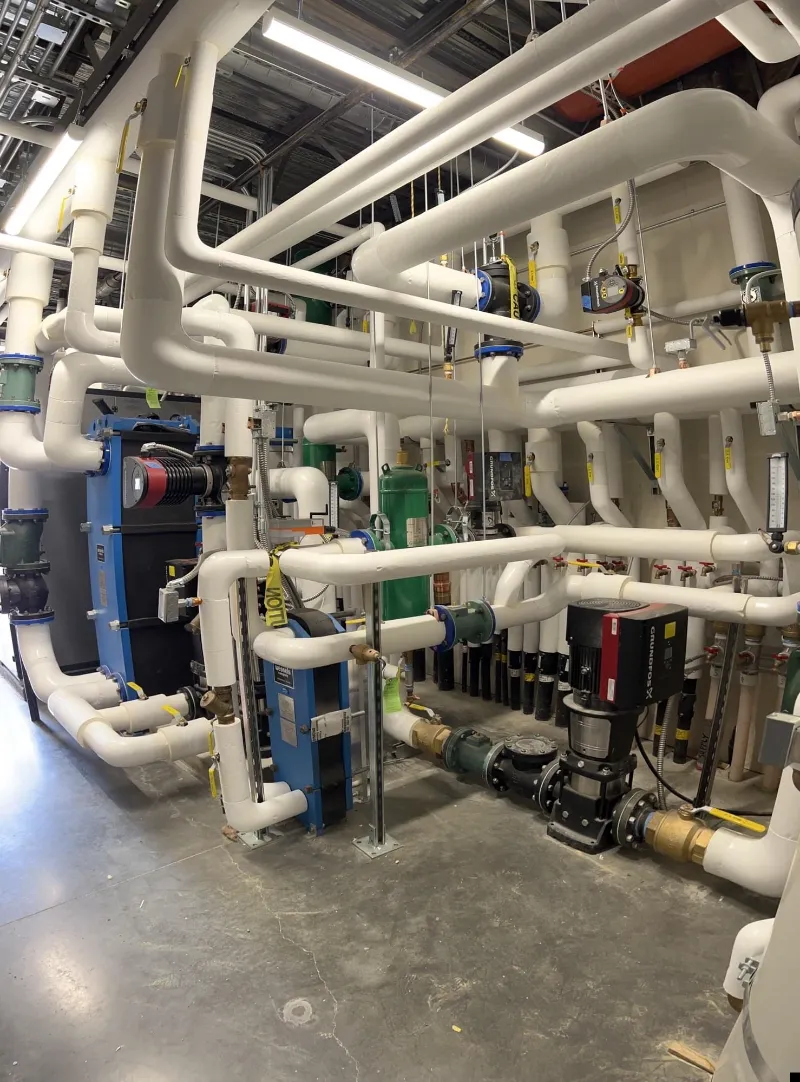
Industrial insulation is like a “heat blanket” for factories, plants, and facilities. It involves wrapping or coating equipment—such as pipes, tanks, boilers, ovens, or even walls—with specialized materials that control heat flow. In simple terms, it keeps hot things hot, cold things cold, and prevents unwanted heat loss or gain.
This simple idea delivers powerful results. Insulating equipment reduces energy waste, lowers operating costs, and protects workers by keeping surfaces cooler and safer to touch. It also helps machinery run more reliably and extends its lifespan. Industrial insulation materials are designed to handle extreme conditions—whether very high or low temperatures, moisture, or chemicals—making them essential in industrial environments. For example, a steam pipe at a power plant might be wrapped in mineral wool or foam, much like putting on a warm coat, to trap heat, save money, and prevent dangerous surface temperatures.
At Northern Insulation AK, we specialize in protecting facilities across Alaska with high-performance industrial insulation. In a region where harsh weather and high energy costs are everyday challenges, insulation isn’t optional—it’s essential. By choosing the right insulation, businesses ensure their operations stay efficient, safe, and cost-effective.
Why Use Industrial Insulation?
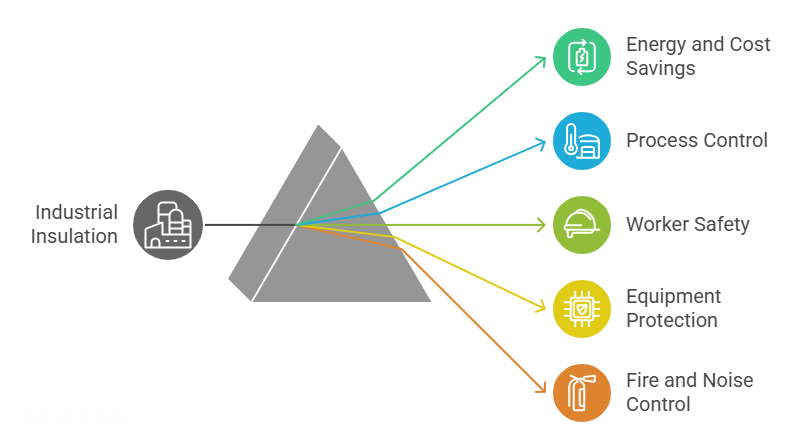
Factories and plants are full of really hot or really cold processes. Insulation is crucial in these settings for several reasons:
- Energy and Cost Savings: Insulating pipes and equipment greatly reduces heat loss (or heat gain), so the facility wastes far less energy. In fact, experts find that a properly insulated plant can cut its heat losses by around 78–88% compared to an uninsulated one. That means burning less fuel or using less electricity to heat or cool materials, which saves a lot of money over time.
- Process Control: With insulation, factories can keep their process temperatures steady and precise. For instance, a chemical reaction or food drying process might require a constant temperature; insulation helps prevent hot steam or cold coolant from drifting off target. In short, insulation helps “lock in” the desired temperature so your operation runs predictably.
- Worker Safety: Exposed hot surfaces can be a serious burn hazard. Wrapping those hot pipes, tanks, and equipment in insulation cuts their external temperature to a safe level. Fiberglass and mineral wool insulations are nonflammable, so they won’t catch fire even at high temperatures. This protects people who work nearby – they can’t accidentally touch a metal pipe and get burned.
- Equipment Protection: On the cold side, insulation stops condensation from forming on cold pipes or tanks. This is important because condensation can lead to “corrosion under insulation” (CUI), which causes leaks and expensive damage. Proper insulation (often with a vapor barrier) keeps the outer surface dry. It also shields equipment from thermal stress and weather damage, extending its lifespan.
- Fire and Noise Control: Insulation can improve fire safety and reduce noise. Many insulation materials (like rock wool) resist fire, so wrapped around equipment they add a layer of fire protection. Insulation also dampens sound and vibration, which means a quieter workplace. In fact, piping insulation often doubles as a noise buffer to protect workers’ ears.
Overall, you can think of industrial insulation as a smart investment: it pays for itself quickly by slashing energy bills and maintenance costs. For example, one industry study found that a €50,000 insulation investment can be recouped in less than two years through energy savings.
Why Industrial Insulation Matters
- Lower Energy Bills – Properly installed insulation cuts down heat loss and keeps cold systems from warming up. That means reduced fuel use, lower electric costs, and long-term savings.
- Process Efficiency – Consistent temperatures mean smoother operations. From food processing to oil and gas, insulation keeps materials at the right temperature so your systems run reliably.
- Worker Protection – Hot pipes and tanks are a burn hazard. Insulating them reduces surface temperatures, protecting your team on the job.
- Preventing Equipment Damage – On cold systems, insulation prevents condensation and corrosion under insulation (CUI), which can shorten the life of your equipment.
- Noise & Fire Safety – Certain insulation materials reduce industrial noise and add an extra layer of fire resistance, creating a safer and more comfortable workplace.
Common Insulation Materials and Methods
Industrial insulation uses specially designed materials – far tougher than the pink foam batting used in homes. In factories you’ll see insulations made from mineral fibers, ceramic mats, foams, and more. Modern industry “relies on” materials like rockwool (stone wool), fiberglass, and rigid polyurethane or polyiso foam. These can withstand high heat without melting, or extreme cold without cracking.
Some typical materials and forms include:
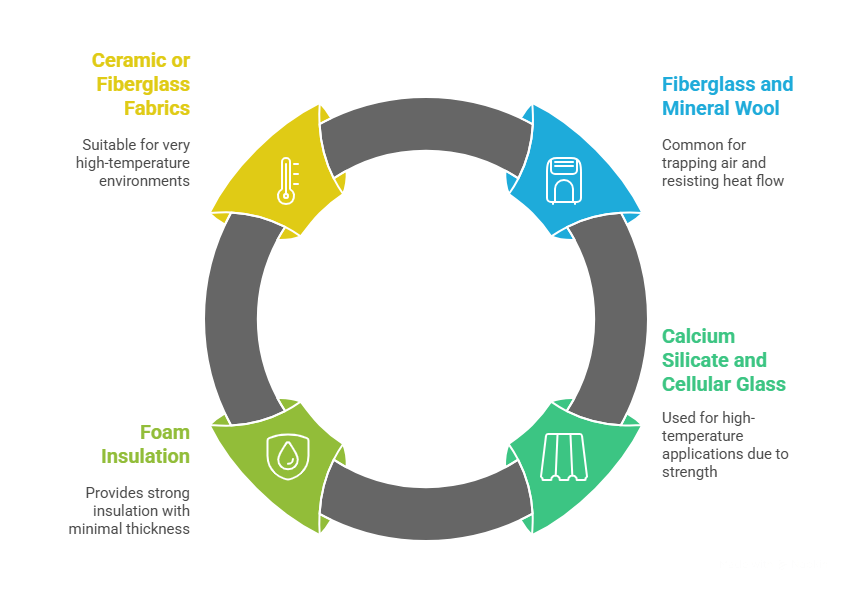
- Fiberglass and Mineral Wool: These look like fluffy, wool-like batts or mats. They’re very common because they trap air and resist heat flow. They also handle high temperatures (up to several hundred °C) and won’t corrode metal. Fiberglass blankets and boards can be cut to size and wrapped around pipes and equipment.
- Calcium Silicate and Cellular Glass: These are rigid, hard boards or blocks used around really hot pipes or vessels (like steam lines). They have excellent strength and don’t break down under heat.
- Foam Insulation (Polyiso, Polyurethane): Closed-cell foam panels or pipe sections provide strong insulation with little thickness. They’re lightweight and waterproof. For example, polyurethane foam pipe covers are used outdoors or in damp areas because they resist moisture. The Wikimedia image above shows several foam insulation sections for pipes (with protective coatings).
- Ceramic or Fiberglass Fabrics: For very high temperatures (like kilns or furnaces), special fabric blankets (often coated in silicone or other barriers) can insulate surfaces.
- Additional Covers: Often the insulation core is covered by a metal jacketing (like aluminum or stainless steel) or a weatherproof wrap to keep the insulation dry and physically protected.
The right material depends on the situation. For example, a steam pipe outdoors might use a thick mineral wool blanket inside a metal jacket, while an indoor chilled-water pipe might use a thinner closed-cell foam with foil facing. Equipment like boilers or towers is often insulated with modular boards or sprayed ceramic. Contractors may even use removable “blanket” covers for valves or flanges that need frequent access. As one industry guide notes, fiberglass blankets are popular and easy, but many plants mix materials — pipes here, loose-fill there — to fit each need.
Insulation Materials We Use
Every facility is different, and we match the material to your specific needs:
- Fiberglass & Mineral Wool – Reliable, cost-effective, and capable of handling high temperatures.
- Calcium Silicate & Cellular Glass – Durable solutions for extreme heat or high-pressure systems.
- Closed-Cell Foam (Polyurethane/Polyiso) – Lightweight, moisture-resistant options perfect for Alaska’s outdoor and marine environments.
- Ceramic & Specialty Wraps – Designed for furnaces, kilns, and other ultra-high-temperature applications.
- Protective Jacketing – Metal or weatherproof coverings that shield insulation from snow, ice, and heavy wear.
Choosing the Right Insulation
Picking insulation is not one-size-fits-all. Engineers consider several key factors when choosing materials and thickness:
- Maximum Temperature: The insulation must withstand the hottest (or coldest) process in your system. Each material has a temperature limit. For very high temperatures (hundreds of °C), you need ceramic fiber or mineral wool; for moderate temperatures, fiberglass or foam might do.
- Environment/Elements: Will the insulation see rain, chemicals, or oil? Materials must resist those. For example, an outdoor steam pipeline might get rain or snow. You’d use a moisture-resistant insulation (like closed-cell foam) and a sealed jacket. Insulation inside a chemical plant might need a coating to resist acid or solvents.
- Safety and Standards: Different industries have rules. For instance, food plants or refineries have strict fire-safety standards. Always use certified materials that meet local codes (like UL fire ratings, or chemical compatibility). Many insulating fibers are fire-retardant, but the jacketing and adhesives must be, too.
- Available Space: Some equipment has tight clearances. If you only have a few inches to spare, you’ll need a high-performance (high R-value) material, like aerogel or foam board, instead of a bulky blanket. In cramped areas, flexible wraps or thin foil-faced insulators are used.
- Touch Temperature: This is how hot the surface gets after insulation. If workers handle that equipment, the outer temperature must be safe (often below ~60°C for touch, or as required by safety code). Some materials cool a pipe down a lot, others let it run hotter outside. The choice depends on whether the pipe is in a public area or behind the scenes.
In practice, designers do a “temperature profile” and space analysis: what are the hot and cold spots, and how much insulation can we fit? They balance performance against cost. The standard may even specify an energy efficiency class for the whole system (as in Europe’s EN 17956) to ensure a certain grade of insulation.
Where Is Industrial Insulation Used?
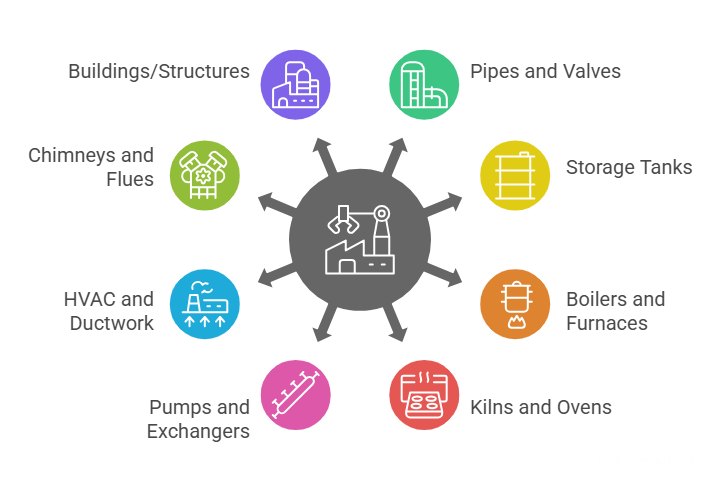
Industrial insulation is everywhere in modern plants. Any time a factory moves heat or cold from one place to another, insulation likely wraps that equipment. Common applications include:
- Pipes and Valves: Steam, hot water, or refrigerant lines are insulated along their run, with extra covers at joints and valves. This keeps the fluid at the right temperature between machines.
- Storage Tanks and Vessels: Tanks holding hot liquids (like hot oil or steam drums) or cold fluids (like cryogenic tanks) are usually jacketed in insulation to prevent heat loss/gain.
- Boilers and Furnaces: The body of a boiler or furnace is heavily insulated inside and out to keep heat in.
- Kilns and Ovens: Industrial ovens (for baking, curing, metal treatment) have thick ceramic or fiber insulation inside walls.
- Pumps and Exchangers: Heat exchangers, pumps, and other process gear often get insulation where pipes connect, and sometimes whole sides are insulated if space allows.
- HVAC and Ductwork: In factories, large heating and cooling ducts are insulated to maintain efficiency.
- Chimneys and Flues: Hot flue gases need insulated chimneys to prevent condensation and protect structures.
- Buildings/Structures: Even building walls and roofs in industrial settings may use insulation (often heavier-duty types) to control the internal climate and sound.
You’ll find industrial insulation in power plants, oil refineries, chemical plants, metal mills, paper mills, food processing plants, and ship engines – basically any facility dealing with extreme temperatures. In food factories, for example, pipes carrying hot paste or cold storage tanks are insulated to keep products safe and energy use down. In marine and offshore platforms, insulation protects pipes from the elements and keeps seawater or steam at the right temperature.
Where We Install Insulation
Northern Insulation AK works across industries, with a focus on Alaskan needs:
- Piping Systems & Valves – Steam, hot water, chilled water, and refrigeration lines.
- Tanks & Vessels – From hot oil storage to cryogenic tanks.
- Boilers, Furnaces & Ovens – Keeping heat inside where it belongs.
- Heat Exchangers & Pumps – Reducing energy loss in critical process equipment.
- Ductwork & HVAC – Boosting efficiency for industrial heating and cooling.
- Marine & Offshore Applications – Protecting systems against salt, weather, and extreme conditions.
Conclusion
In summary, industrial insulation is the practice of outfitting factories’ hot and cold equipment with specialty materials to control temperature, improve efficiency, and enhance safety. You can think of it as giving the plant a thick sweater or blanket that keeps the heat where it belongs. Proper insulation saves energy (and therefore money), protects workers from burns, reduces wear on equipment, and helps factories meet environmental and safety goals.
Why Choose Northern Insulation AK?
Operating in Alaska requires insulation that stands up to harsh weather, fluctuating temperatures, and remote conditions. Our team has years of hands-on experience providing insulation solutions across industrial, marine, and commercial settings.
We don’t just install — we evaluate your facility, recommend the best materials, and ensure everything meets safety and efficiency standards. From Wasilla to Anchorage and across the Mat-Su Valley, we’re committed to helping Alaskan businesses lower costs, protect their people, and extend the life of their equipment.
Get Started Today
Whether you’re upgrading an existing system or starting a new project, Northern Insulation AK has the expertise to deliver. Contact us today to schedule a consultation and see how the right insulation can save your business money while keeping operations safe and efficient.