Commercial insulation refers to the materials and systems used to insulate non-residential buildings – such as offices, factories, schools, stores and other businesses – against heat, cold, noise and moisture. In simple terms, it’s the “blanket” wrapped around a commercial building’s walls, roof, floors and mechanical systems to keep the indoor environment comfortable and energy-efficient. Insulation slows the transfer of heat into or out of the building. In practice, this means your heaters and air conditioners don’t have to work as hard, saving energy and money. Commercial insulation is critical for energy efficiency and building longevity – for example, it can cut a building’s energy use by up to 20–30%.
Good commercial insulation also improves comfort and safety. By creating a thermal barrier, it helps maintain steady indoor temperatures (warm in winter, cool in summer) for workers and equipment. It reduces drafts and “hot” or “cold” spots inside large spaces. Many insulating materials also dampen sound, cutting noise from neighboring rooms or the outdoors. And because many insulation products (like fiberglass and mineral wool) are naturally fire-resistant, they can add valuable fire protection. In short, commercial insulation is any insulation used in business and industrial buildings to control heat flow, reduce noise and meet building safety/energy codes.
Key Benefits of Commercial Insulation
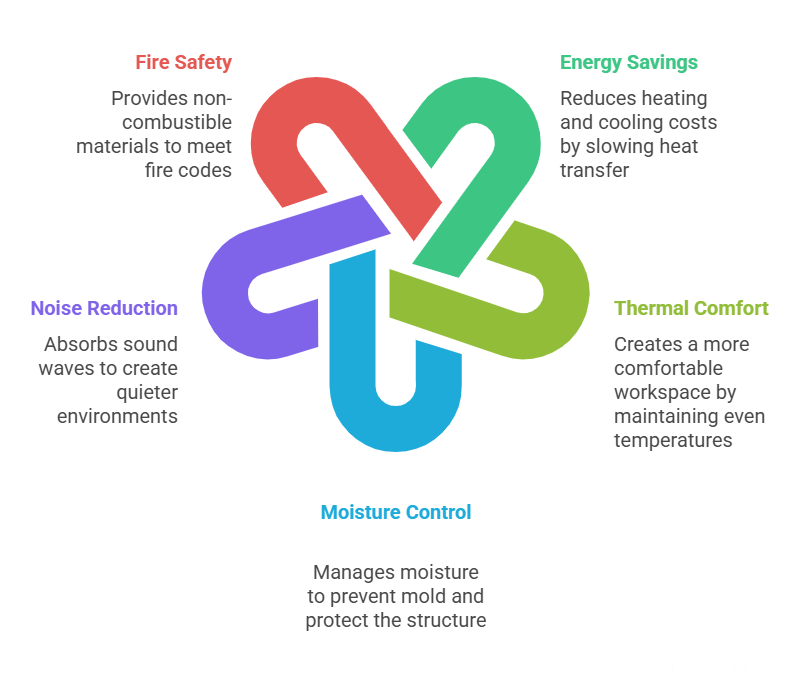
- Energy Savings: Commercial insulation dramatically lowers heating and cooling costs by slowing heat transfer. It keeps conditioned air inside and extreme temperatures out. Buildings with good insulation typically see 20–30% lower energy bills than uninsulated ones.
- Thermal Comfort: By reducing temperature swings, insulation creates a more comfortable workspace. It helps eliminate “hot spots” and drafts, maintaining even indoor temperatures year-round.
- Moisture Control: Quality insulation (especially continuous exterior insulation) also helps manage moisture. It keeps walls and roofs drier by reducing condensation, preventing mold and protecting the structure.
- Noise Reduction: Insulation materials like fiberglass, mineral wool and cellulose absorb sound waves. In commercial buildings this means quieter offices and fewer distracting echoes or outside noises. Fiber-based insulation can achieve high sound absorption (up to NRC 1.00) and strong sound transmission class (STC) ratings between rooms.
- Fire Safety: Many commercial insulations (fiberglass and mineral wool) are non-combustible. Using them can help a building meet fire codes. Rigid foam boards (like polyiso) also resist flames by charring instead of melting.
Together, these benefits make insulation a smart investment: it lowers operating costs, improves occupant comfort, and meets energy/code requirements.
Common Commercial Insulation Materials
Several types of insulation are used in commercial projects, chosen for the building’s needs. Common materials include:
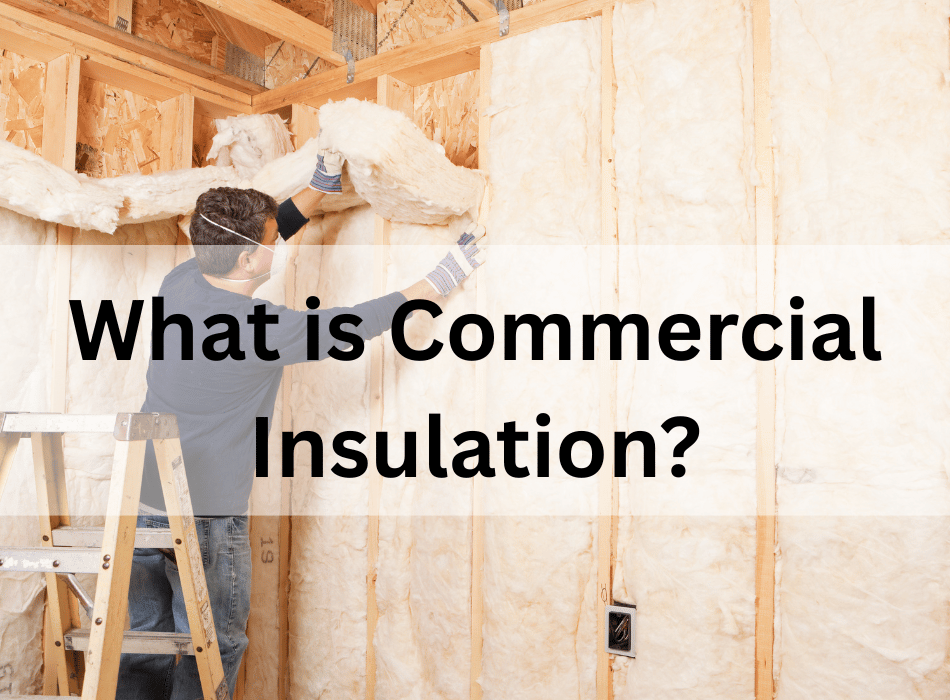
- Fiberglass (Glass Wool): Made of fine glass fibers, this is one of the most widely used insulation materials. It comes in batts, rolls or loose-fill. Fiberglass is lightweight, cost-effective and naturally fire-resistant. It provides good thermal performance and noise reduction.
- Mineral Wool (Rock Wool): Mineral wool is made by spinning molten rock or slag into wool-like fibers. It has excellent fire resistance (it won’t ignite and often withstands very high temperatures) and strong acoustic damping. It’s often sold in batts or boards and contains a high recycled content.
- Rigid Foam Boards: This category includes materials like polyisocyanurate (polyiso), extruded polystyrene (XPS) and expanded polystyrene (EPS). Rigid foam boards are installed as sheets on walls, roofs or slabs. They offer high R-values (thermal resistance) per inch, so they insulate very well in tight spaces. For example, polyiso boards (often used on roofs and walls) deliver very high insulation and also add a moisture barrier.
- Spray Foam Insulation: Spray polyurethane foam (open-cell or closed-cell) is sprayed into wall cavities or onto surfaces. It expands to fill gaps, creating an air-tight seal. This makes spray foam extremely effective at preventing leaks and heat loss, even in irregular or hard-to-reach spaces. It also has a high R-value and adds structural strength. (Note: spray foam must be applied by trained professionals due to chemicals involved.)
- Cellulose: Often made from recycled paper, cellulose insulation is usually blown into walls or attics. It’s eco-friendly and can fill cavities tightly. Additives make it fire-retardant. While it’s common in homes, dense-packed cellulose is also used in commercial walls and attics for thermal and sound control.
- Reflective Foils (Radiant Barriers): These are aluminum-faced panels or foils that reflect radiant heat. They’re mainly used in roof assemblies (especially in hot climates) to bounce heat away. Reflective insulation helps keep heat out in summer by reflecting sunlight, complementing other insulation layers.
Each material has pros and cons. In practice, commercial buildings often use a combination (for example, fiberglass batts inside walls plus rigid foam on exterior walls). The exact choice depends on factors like budget, space, moisture conditions, fire codes and desired R-value.
Where Commercial Insulation is Used
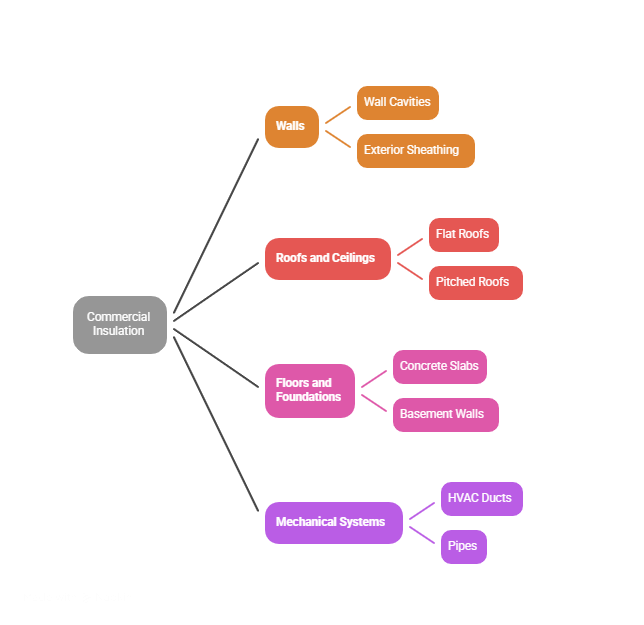
Commercial insulation is installed throughout a building’s envelope and systems:
- Walls: Insulation goes inside wall cavities or on exterior sheathing. Continuous insulation on walls (foams or rigid boards) can eliminate thermal bridges through studs. This is common in office buildings, schools, stores and factories to improve whole-wall performance.
- Roofs and Ceilings: Roof insulation keeps heat out in summer and in during winter. Commercial flat roofs often use rigid foam or tapered insulation boards under the roof membrane. Attic or ceiling insulation (batts, loose-fill, or spray foam) is used under pitched roofs or drop ceilings to improve thermal efficiency. Polyiso boards, in particular, are the industry standard for insulating commercial roofs.
- Floors and Foundations: Insulating concrete slabs and foundation walls is important in cold climates. Rigid foam (EPS/XPS) is commonly applied under slabs or on basement walls to slow ground heat loss. This also helps protect against frost heave and moisture intrusion.
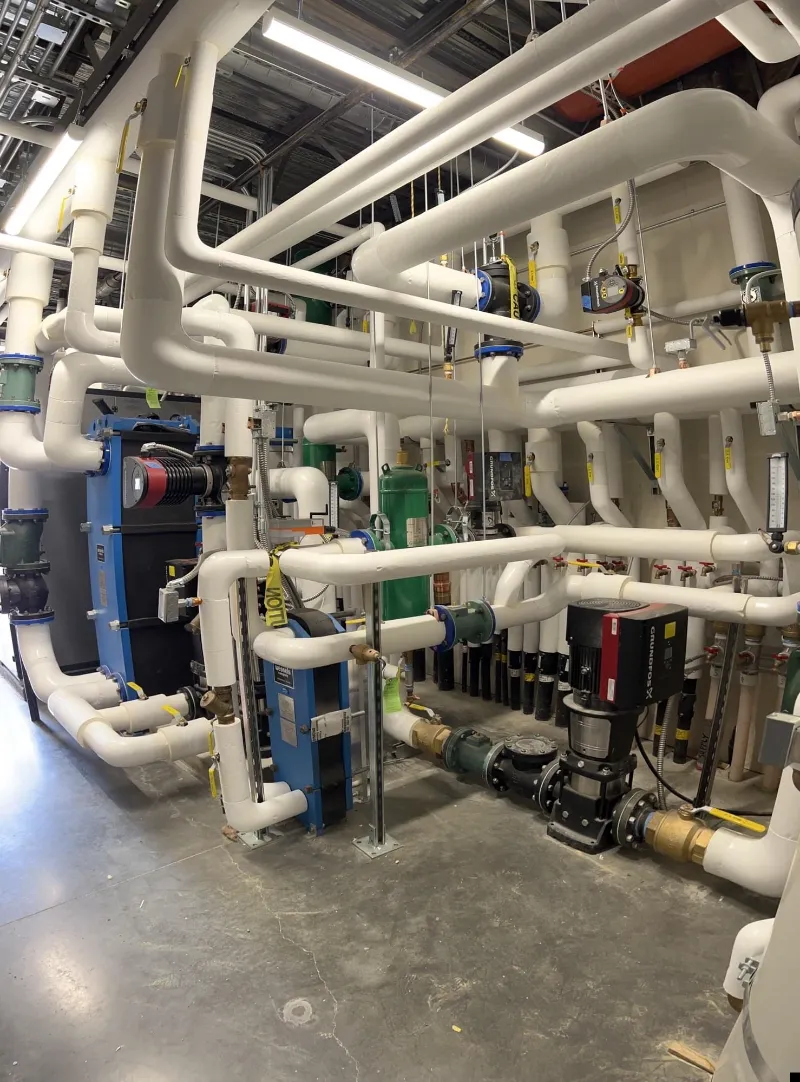
- Mechanical Systems: Insulation is also applied to HVAC ducts, pipes, boilers and equipment. Wrapping ducts and pipes with fiberglass or foam prevents heat loss (or gain) in transit. It improves system efficiency and can prevent condensation on cold surfaces. For example, spray foam or foam pipe covers can seal leaks around plumbing penetrations.
In essence, any part of the building that separates conditioned space from outside (or from unheated areas) is a candidate for insulation. Well-insulated walls, roofs, floors and HVAC systems work together to keep the building energy-efficient and comfortable.
Meeting Commercial Standards
Commercial buildings face more stringent insulation requirements than homes. Building codes often demand higher R-values and include fire and acoustic standards. For instance, commercial walls must often meet NFPA 285 fire tests if using foam insulation. Because of this, installers choose materials rated for fire safety and sound control.
Also, commercial projects are larger and more complex. They require careful planning, more materials and specialized installation crews. For example, insulating a multi-story office building or a warehouse roof involves more logistics than a single-family house. Insulation contractors working on commercial sites must often be certified or trained for high-volume spray foam rigs, industrial ceilings, and heavy ductwork.
Trust the Experts at Northern Insulation Solutions
Understanding and installing the right commercial insulation can be overwhelming. If you own or manage a commercial building in Alaska, work with professionals who know local codes and climate. Northern Insulation Solutions is Alaska’s largest locally-owned insulation contractor, with expertise in mechanical, industrial and marine projects. Our team can assess your building and recommend the best insulation materials and methods to save you money and improve comfort.
Ready to improve your building’s efficiency? Contact Northern Insulation Solutions for a free quote and expert service. We’ll help you choose the right commercial insulation solution for your project and ensure it’s installed correctly, so your business stays comfortable and energy-efficient for years to come.